Bereavement Quotes: Sympathy Words That Actually Help
“Bereavement” is the formal word — the one on the card from the funeral home, in the HR email, in the order of service. Underneath it is the same human thing as grief: someone loved is gone, and the people left behind need words that do not embarrass anyone.
This page is for both sides of that card: short bereavement quotes that are safe to send, and examples of what to write around them.
Short bereavement quotes for cards
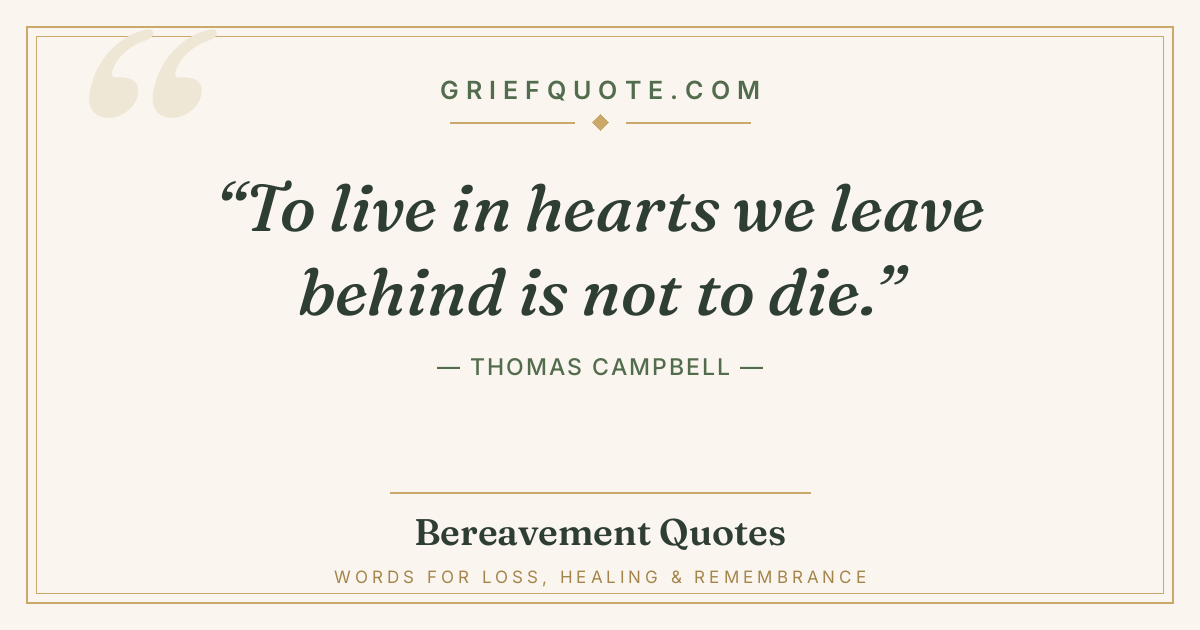
- “To live in hearts we leave behind is not to die.” — Thomas Campbell
- “What we have once enjoyed deeply we can never lose. All that we love deeply becomes a part of us.” — Helen Keller
- “Although it’s difficult today to see beyond the sorrow, may looking back in memory help comfort you tomorrow.” — Anonymous
- “Your life was a blessing, your memory a treasure. You are loved beyond words and missed beyond measure.” — Anonymous
- “Perhaps they are not stars, but rather openings in heaven where the love of our lost ones pours through and shines down upon us to let us know they are happy.” — Anonymous
- “Death ends a life, not a relationship.” — Mitch Albom, Tuesdays with Morrie
What to write in a bereavement card
Quote first if you like, then your own sentence — that sentence is the part they will remember.
For a friend: “I was so sorry to hear about your father. I keep thinking of his garden and his terrible jokes in it. He was loved by everyone who met him, and so are you.”
For a colleague: “Please accept my condolences on the loss of your mother. Take the time you need — your work is covered, and we are thinking of you.”
Short and formal, when you knew them less well: “With deepest sympathy on your loss. [Name] will be remembered with great respect by everyone here.”
More wording: Sympathy and grief card quotes
When a colleague comes back after a bereavement
The return to work is one of the hardest days, and the office usually gets it wrong in one of two directions: a fuss, or total silence. The middle path is simple:
- Say it once, plainly, on day one: “I’m so sorry about your dad. It’s good to see you.” Then let them work.
- Use the person’s name if it comes up naturally in the following weeks. Silence about them is the loneliest option.
- Expect an ordinary Tuesday, three months later, to be worse than the first week. That is when a quiet “thinking of you” matters most.
Questions people ask about bereavement
What is the difference between bereavement, grief and mourning?
Bereavement is the state of having lost someone. Grief is what you feel inside it. Mourning is grief shown outwardly — funerals, rituals, black clothes, tears in public. Same loss, three angles.
How long does bereavement leave usually last?
It varies widely by country and employer — a few days for an immediate family member is common, sometimes more, often less than people need. Check your own policy, and if you manage people, treat the stated number as a floor, not a measurement of their grief.
What should a bereavement message say if I barely knew the person?
Short, warm, no claims on closeness you did not have: “I was sorry to hear of your loss. [Name] was respected by everyone who worked with them.” Honesty reads as kindness at every distance.
Formal words, real feeling — that is all a bereavement message has to manage. The quotes carry the poetry; your one honest sentence carries the love.
Related reading: Family grief quotes · Grief quotes for a friend · Bible verses for grief


4 Comments